

A New Horizon for Neurological Health
NeuroSigma is researching trigeminal nerve stimulation (TNS) as a novel neuromodulation therapy for a variety of neurological and neuropsychiatric disorders. TNS was invented at UCLA, and NeuroSigma is the exclusive worldwide licensee of UCLA's intellectual property portfolio related to this technology.
Our Mission
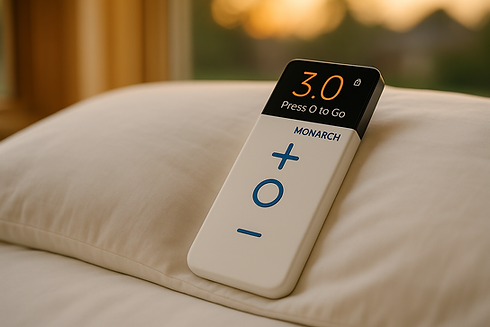
To develop and commercialize groundbreaking bioelectronic treatments that give patients and families real choices. We exist because there is an urgent, unmet need for safe, effective, non-drug options—alternatives that work with the body's own systems rather than override them. Our FDA-cleared Monarch eTNS System for pediatric ADHD is proof this future is possible.
It's also just the beginning.

Our Vision
We envision a world where bioelectronic medicine stands alongside pharmaceuticals and behavioral therapy as a standard pillar of neurological care. Where physicians can offer patients powerful, proven alternatives. Where "treatment-resistant" doesn't mean "out of options." Our trigeminal nerve stimulation (TNS) platform is designed to become a fundamental, first-line treatment for conditions ranging from ADHD and epilepsy to depression and beyond—delivering new hope and measurably better outcomes for millions.
Why This Matters
For decades, neurological and psychiatric care has relied heavily on a single approach: pharmaceuticals. But medications don't work for everyone. They come with side effects. They raise questions for parents facing that first prescription. And for millions of patients, they simply aren't enough.
Bioelectronic medicine offers something different—a way to modulate neural activity using the body's own pathways, without chemicals, without dependency, and without the metabolic concerns that come with long-term drug use. It's not about replacing medication; it's about expanding what's possible. It's about giving patients control and clinicians more tools in their arsenal.
Building the Future, Today.
NeuroSigma's leadership brings together decades of experience in medical device innovation, clinical research, neuroscience, and healthcare entrepreneurship. But beyond the expertise, we're united by something simpler and more powerful: the belief that patients deserve better, and the determination to deliver it.
We are building a brighter future for neurological health. And that future is already here.


The Monarch eTNS® System
The First FDA Cleared Device for Treating Pediatric ADHD.
The Monarch eTNS® System is indicated for the treatment of pediatric Attention Deficit Hyperactivity Disorder (ADHD) as a monotherapy in patients ages 7 through 12 years old who are not currently taking prescription ADHD medications.
The device is used for patient treatment by prescription only and is intended to be used in the home under the supervision of a caregiver during periods of sleep.
Important Safety Information:
Indication: Monarch eTNS® System is indicated for treatment of pediatric ADHD as a monotherapy in patients ages 7 to 12 who are not currently on prescription ADHD medications. The device is for use during sleep under the supervision of a caregiver.
Contraindications: Not for use in patients with implanted pacemakers, neurostimulators, or metallic/electronic head implants. Do not use in children under 7.
Common side effects: Drowsiness, increased appetite, insomnia, teeth clenching, headache, fatigue. Rx Only. Please refer to the Instructions for Use or contact us for full safety information.”
For full Indication, Contraindications and Important Safety Information see the detailed labeling or contact Medical Affairs at (310) 479-3100.
References:
1. McGough JJ, Loo SK, Sturm A, et al. An eight-week, open-label pilot feasibility study of trigeminal nerve stimulation in youth with attention-deficit/hyperactivity disorder. Brain Stimulation. 2015;8:299-304.
2. McGough JJ, Sturm A, Cowen J, et al. Double-blind, sham-controlled, pilot study of trigeminal nerve stimulation for attention-deficit/hyperactivity disorder. J Am Acad Child Adolesc Psychiatry. 2019;58(4):403-411.